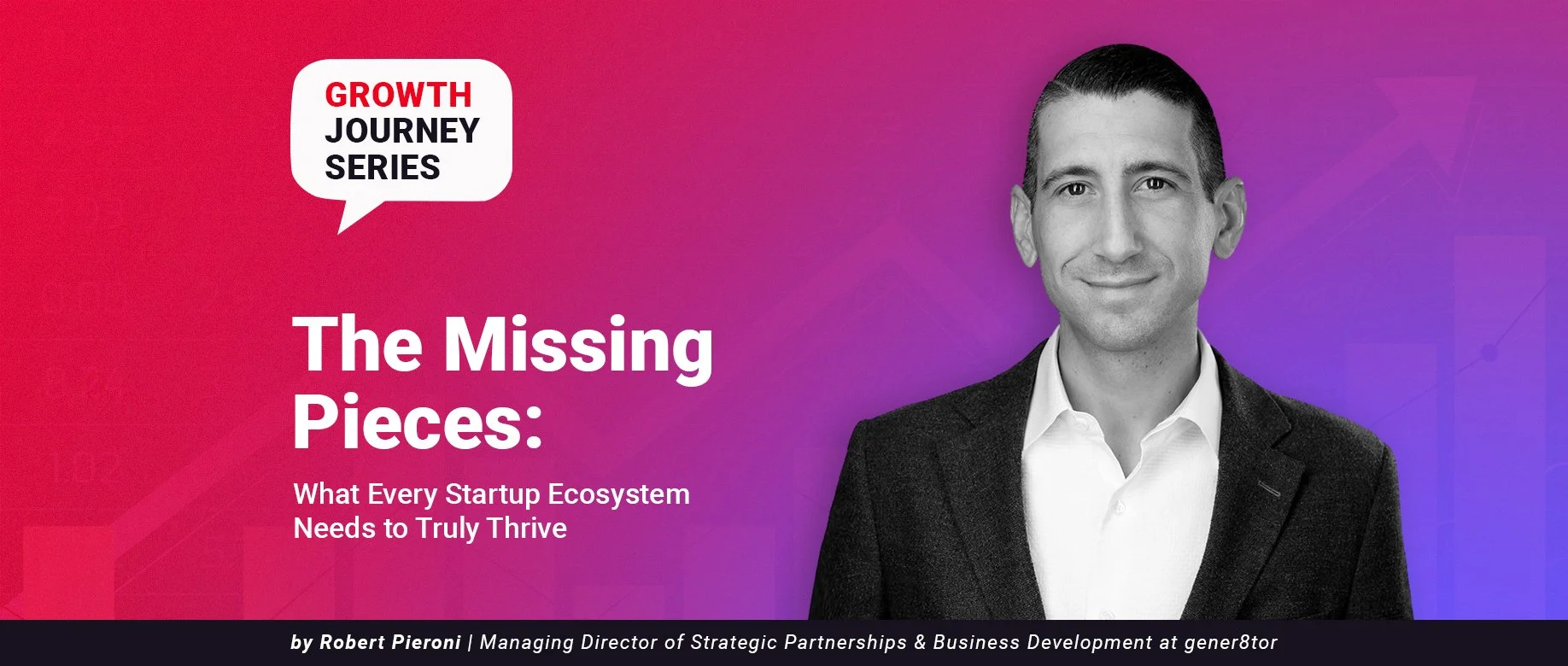
The Missing Pieces: What Every Startup Ecosystem Needs to Truly Thrive
Opinion Piece #1: Why Access to Quality Resources Still Makes or Breaks a Startup Ecosystem
Let’s be honest, every founder starts with a dream and a pitch deck. But turning that into a company that hires people, attracts capital, and makes a real dent in the world? That takes way more than just ambition.
In my work across startup ecosystems around the world, I keep seeing the same gap: founders are trying to build empires without the blueprint, the crew, or the tools. It’s not a lack of drive, it’s a lack of access to quality, targeted resources that actually move the needle.
The Problem: Founders Are Navigating Alone
Too many founders are left figuring things out on their own. They might be part of a local coworking space or have access to some events, but they’re missing structured, reliable support, the kind that provides clear direction and deep expertise.
What’s often missing?
Accelerators that go beyond surface-level advice, tailored to the industry they’re building in.
Mentors who’ve actually done it before, who can challenge them, open doors, and provide hard-earned insight.
Warm intros to investors and potential customers who can help validate, fund, and scale their ideas.
Without those elements, even the most promising startup can end up running in circles, or worse, burning out before it really begins.
Why It Matters: Good Resources Speed Everything Up
Great support doesn’t just prevent failure, it speeds up everything. When a founder is surrounded by the right people, the right insights, and the right opportunities, their learning curve shortens. Their confidence grows. They make better decisions faster.
This is what separates thriving ecosystems from ones that fizzle out: founders aren’t left guessing. They’re supported by a community that gives them the tools, and trust, to move forward.
What Works: Structure, Specialization, and Skin in the Game
Building real startup support means going beyond platitudes. The best ecosystems intentionally create:
Accelerators that are industry-aware, not one-size-fits-all.
Mentor networks that go deep, pairing founders with people who understand their vertical, not just business basics.
Partnerships with investors and corporations, so startups get early feedback and real-world traction—not just theory.
What We’re Doing at gener8tor
At gener8tor, we’ve spent the last 13+ years building programs that deliver more than just funding. Our accelerators are designed to meet founders where they are, with hands-on mentorship, curated investor connections, and real pathways to scale.
Whether it's helping a startup land its first pilot customer or prepping them for their next funding round, our programs fill the gaps that so many ecosystems leave behind. Because when founders get the right kind of support at the right moment, their odds of success go way up, and so does the impact they can have on the economy around them.
Opinion Piece #2:The Power of Networks: Why Developed Ecosystems Are the Real Game-Changer
Over the years, I’ve had the chance to work with startup communities all over the world. Some are just getting started, still trying to find their rhythm. Others are more established, trying to hold on to their edge and keep the energy going.
And no matter the city, no matter the region, I keep seeing the same pattern: the ecosystems that really thrive are the ones built on real, deep, well-connected networks.
Not just a handful of startups working in a coworking space. Not just a slick innovation district with good branding. I mean a community where founders can actually reach out to mentors, investors, and other builders, and get real support when it counts.
The Problem: Good Ideas, Going Nowhere
In too many places, founders are pushing hard, but doing it on their own. They might have some tools at their fingertips, maybe a few local events or a startup weekend here and there. But they’re missing something bigger: reliable, experienced guidance and access to people who’ve done it before.
And that’s the real issue. A founder can be sitting on a brilliant product or an incredible idea, but if there’s no one to help them think it through, navigate the hard decisions, or introduce them to early investors, they’re stuck.
This isn’t about having more demo days or building another incubator. It’s about building a network of people who actually show up, mentors who give honest feedback, investors who take meetings seriously, and peers who share what they’ve learned.
Why It Matters: Traction Comes from Connection
When a founder is plugged into a real network, things start to shift. They move faster. They stop wasting time chasing down dead ends. They build with more confidence because they’re not figuring everything out alone.
Instead of cold emails that go nowhere, they get warm intros. Instead of second-guessing themselves, they get insights from people who’ve lived it. That kind of network builds momentum, and momentum changes everything.
It’s how ideas become companies. It’s how startups hire, raise capital, scale. And ultimately, it’s how ecosystems go from aspiring to actual.
What Works: Be Intentional About the Network
The good news? This isn’t some unsolvable mystery. Ecosystems don’t have to wait for magic, they can build the network on purpose. Here’s what actually works:
Mentor networks with structure. Clear roles, onboarding, and mutual expectations.
Cross-industry conversations. Founders need input from people outside their echo chamber.
Consistent, relationship-first programming. Not just pitch competitions, real opportunities for founders and investors to get to know each other.
What We’ve Seen at gener8tor
We’ve watched this play out in real time. Take Milwaukee, for example. Over the past decade, that startup community has grown, not because of a single headline-grabbing investment, but because of steady, consistent effort to connect the dots.
Founders are matched with mentors who’ve actually built companies. Investors don’t just come to demo day, they come early, stay late, and follow up. The community doesn’t just exist, it moves with its founders, not against them.
It’s not perfect. No place is. But the progress is real. And more importantly, it’s replicable.
One Last Thought
You can’t build a thriving startup community on pitch decks and potential alone. You need people. A living, breathing network of humans who are committed to helping each other grow.
Because startups don’t grow in isolation.
They grow in connection.
Opinion Piece #3: Why Thinking Globally Shouldn’t Be an Afterthought
If there’s one thing I’ve learned working across ecosystems around the world, it’s this: too many founders think too small, not because they lack ambition, but because they lack access.
They’re told to “think global,” but they’re not given the network, mentorship, or pathway to actually make that leap. And in a world where startups in Tel Aviv, Austin, Milan, and São Paulo are all chasing the same customers and capital, local-only thinking just doesn’t cut it anymore.
The Challenge: Breaking Out of the Bubble
A lot of early-stage founders build great companies in local markets—then hit a wall. They don’t know how to expand into new countries, don’t have the right legal or cultural know-how, and definitely don’t have the international investor or customer connections to take the next step.
That’s not a founder problem. That’s an ecosystem gap.
Startups need more than encouragement to “go global”, they need real guidance, trusted relationships in foreign markets, and a community that helps them bridge the distance.
Why It Matters: Growth Comes From Outside Your Zip Code
Scaling isn’t just about hiring or raising a bigger round, it’s about accessing new markets, building cross-border partnerships, and finding the right customers at the right stage.
If a founder’s only selling to people in their own city or country, they’re limiting their total impact from day one. Global startups tend to attract more capital, bring in more revenue, and stay more resilient in market shifts. Ecosystems that fail to support that journey are essentially placing a ceiling on their own success.
What Works: Bridges, Not Borders
Here’s what ecosystems can (and should) be doing:
Creating cross-border partnerships with accelerators, investors, and economic development organizations.
Launching soft-landing programs that help founders test new markets without flying blind.
Connecting local startups with international mentors, customers, and investor networks.
This isn’t about chasing shiny global partnerships for headlines. It’s about building practical, two-way pathways that help founders scale confidently.
What We’re Doing at gener8tor
At gener8tor, we’ve leaned into international expansion not just for the sake of growth, but to open up new possibilities for the founders and communities we serve. From our first programs in the U.S. to new initiatives in Europe and beyond, we’ve seen how giving startups a launchpad into new markets can dramatically shift their trajectory.
By helping founders tap into global networks, whether it’s investors in other countries, corporate partners abroad, or soft-landing programs that de-risk international expansion, we’re not just building startups. We’re helping build globally connected ecosystems that benefit entire communities.
Because at the end of the day, local success is great, but global reach? That’s where real impact happens.
Opinion Piece #4: Capital Isn’t Everything, But It’s Close
Let’s cut to the chase: you can have a brilliant founder, a killer idea, and a hungry market, but without capital, nothing moves.
I’ve seen this play out across dozens of regions. The passion is there. The talent is there. But when it comes time to raise that first check, things grind to a halt. In far too many places, early-stage funding is a desert, and founders are left trying to build skyscrapers without scaffolding.
The Challenge: Money Is Tight, and Tighter in Some Places
While lack of capital is a universal challenge, it’s especially tough in emerging or under-resourced ecosystems. Startups often don’t have local investors who understand early-stage risk. There might be wealth in the region, but little of it is flowing into startups.
So founders spend more time chasing funds than building their business, pitching to out-of-town investors, bootstrapping longer than they should, or giving up altogether. It’s a problem that goes deeper than just dollars, it’s about the energy, confidence, and traction that early capital unlocks.
Why It Matters: Capital is a Catalyst
Access to capital isn’t just about runway, it’s about momentum. With even modest early funding, startups can test, iterate, hire, and get to market faster. They can stop chasing survival and start chasing scale.
Without that capital, founders delay key hires, push back launches, or skip critical steps. And that delay doesn’t just affect them, it slows down the entire ecosystem they’re part of.
What Works: Build the Network Before the Need
Ecosystems that get it right don’t just wait for investors to show up, they build intentional capital networks around their startups. That means:
Educating local high-net-worth individuals on the startup opportunity and encouraging angel investing.
Forming early-stage funds that specialize in seed and pre-seed rounds.
Creating platforms that connect founders with investors, not just at demo days, but through ongoing relationship-building.
One of the best examples I’ve seen recently is in Madison, Wisconsin, where a growing angel and venture community has been steadily shifting the odds for local startups. What used to be a tough fundraising market is now seeing more checks, more syndicates, and more belief in homegrown innovation.
What We’re Doing at gener8tor
At gener8tor, we’ve always believed that talent is equally distributed, but access to capital isn’t. So we’ve spent over a decade building bridges between founders and funders, in cities big and small.
Our programs help prepare startups to raise, yes, but we also bring the capital closer by activating local investor communities, introducing regional VCs to overlooked markets, and creating funding opportunities through every stage of the founder journey.
Because at the end of the day, no startup can scale without fuel, and capital is the oxygen that keeps great ideas alive.
Opinion Piece #5: Traction Talks, Why Customer Access Is the Startup Superpower
If there’s one word every founder wants to say confidently, it’s traction. Not just buzz, not just followers, but real-world validation: people using the product, paying for it, and proving that it works.
But here’s the problem, especially in B2B and deep tech spaces, startups can’t get traction without someone willing to give them a shot. And too often, ecosystems forget that first customers and pilot programs are just as critical as funding or mentorship.
The Challenge: “Come Back When You Have Traction”
Founders hear it all the time. “This looks great, circle back once you’ve got traction.” It’s a fair ask from investors or partners. But for startups with no early access to pilot opportunities, that ask becomes a catch-22: you need traction to get in the door, but you need a door to get traction.
And in many communities, there just aren’t enough corporates, institutions, or early adopters willing, or structured, to run with emerging tech or new ideas. The result? Great solutions sit idle. Founders burn time (and cash) chasing validation instead of building momentum.
Why It Matters: Validation = Confidence + Credibility
Early traction isn’t just about proving the product works. It’s about showing investors that there’s a real market. It’s about helping the founder refine the solution with actual user feedback. And it’s about giving the team the confidence that they’re solving a problem people care enough to pay for.
You can raise pre-seed with a pitch. But raising a seed round, or even landing strategic partnerships, often hinges on that first customer, that first pilot, that first “yes.”
What Works: Give Startups a Chance to Be Heard
Ecosystems that understand this don’t just tell startups to “go sell.” They create environments where early customers and partners are actively encouraged—and sometimes incentivized, to engage. That looks like:
Corporate-startup collaboration programs with built-in paths for pilots and procurement.
Government-backed pilot initiatives that de-risk early adoption for both sides.
Local customer discovery networks where startups can test and iterate with real users early on.
One standout example: in several of our gener8tor markets, we’ve partnered directly with corporates and municipalities to create soft landings for pilot programs, giving startups not just advice, but a real chance to prove what they can do. In more than a few cases, that first pilot has turned into a paying contract, an investor warm intro, or both.
What We’re Doing at gener8tor
At gener8tor, we treat customer access as a core pillar, not an afterthought. Our team works alongside founders to identify pilot partners, open doors to potential customers, and structure engagements that lead to growth, not just feedback.
Because no matter how strong the pitch is or how exciting the tech sounds, nothing validates a startup more than someone using, and paying for, their product. Traction talks. And ecosystems that help startups find it are the ones where real growth happens.
There’s No Perfect Ecosystem, But There Is a Playbook
After working across dozens of startup communities around the world, one thing has become clear: no ecosystem gets it all right. Not Silicon Valley. Not New York. Not any of the rising innovation hubs trying to carve out their space. And that’s okay.
What sets the strongest ecosystems apart isn’t perfection, it’s intentionality. They recognize the gaps. They listen to founders. And most importantly, they take action to build the connections, resources, and support systems startups need to succeed.
If we want our local economies to grow through innovation, we need more than good intentions, we need coordination. That means:
Investors leaning in earlier and more often.
Policymakers crafting smart incentives and removing red tape.
Corporates opening doors to pilot opportunities.
Mentors showing up consistently, not just for demo day.
Ecosystem-building isn’t passive, it’s active, collaborative, and always evolving.
So here’s the question: What’s missing in your startup community, and who do you need at the table to change that?
If we want to build thriving ecosystems, we have to build them together.
Written by Robert Pieroni
